
What if we asked another question?
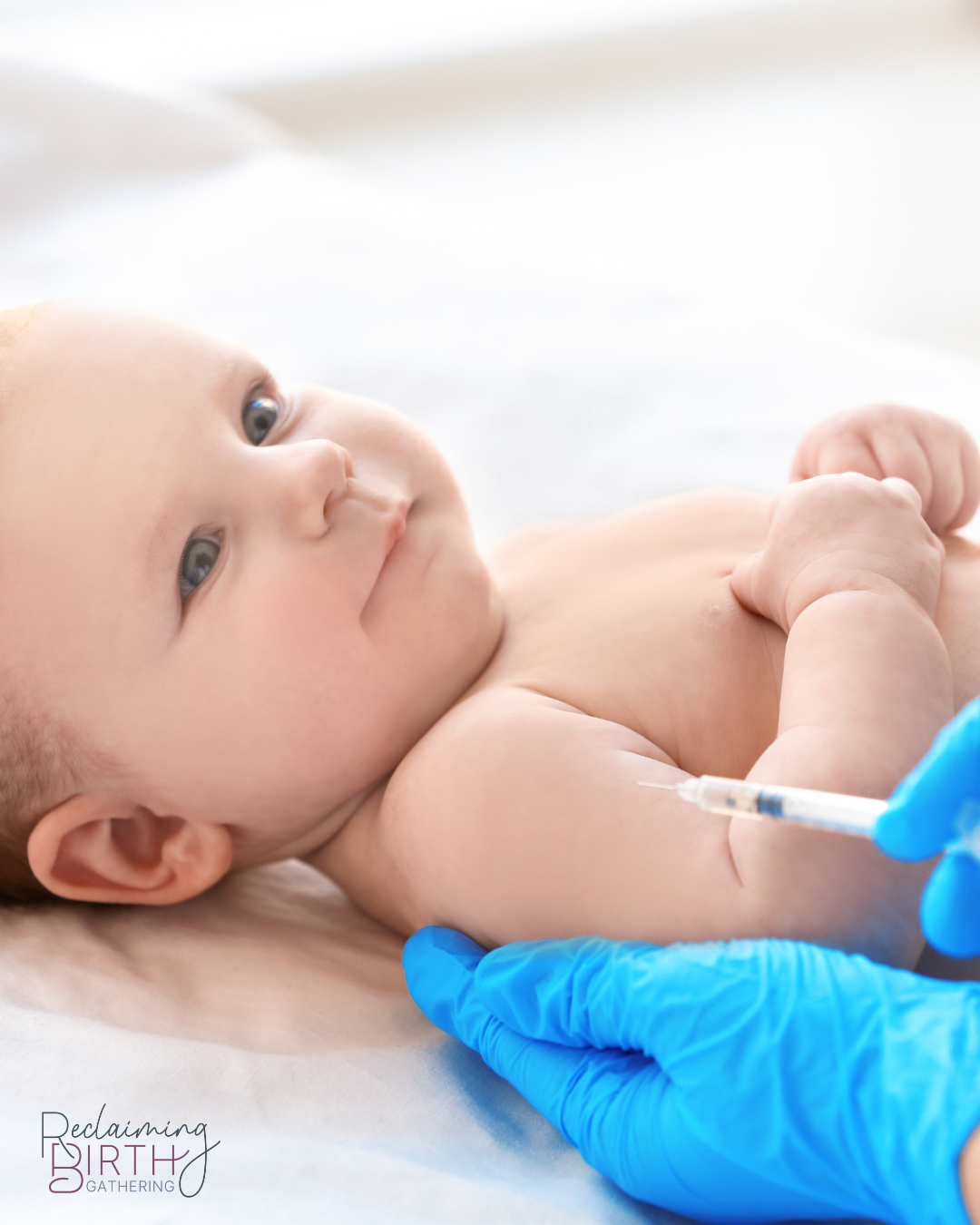
It’s all over the news - Parents Refusing Vitamin K! But there’s a flaw in what’s being presented.
In the 1930s, babies in American hospitals started bleeding at rates that hadn't been seen before. Almost one percent of births.
Researchers found a solution. The Vitamin K injection stopped the bleeding.
And that was the end of that.
Nobody asked what had changed.
I asked on our floor as a NICU nurse — why Vitamin K, and is it really necessary? The answer I got: "It's what we've always done."
We deserve better questions than that.
What changed in the 1930s
Here is what had changed in American-style obstetrics right before babies started bleeding at higher rates.
Mothers were given anaesthetics that rapidly depleted their Vitamin K levels — and therefore their baby's. Babies were washed with germicide the moment they were born, stripping bacteria from their skin before it could colonise. Babies were not fed for three days because colostrum was labelled a gastric irritant and withheld. When feeding finally began, mothers' nipples were washed with germicide first. Skin to skin contact was actively prevented.
The bacteria that build a newborn's Vitamin K come from the mother. Her skin. Her colostrum. Her touch. Every single one of those sources was removed by the new practices of hospitalised birth.
And then we named what happened next a deficiency.
The solution found — the Vitamin K injection — prevented the bleeding. But nobody investigated whether the bleeding was caused by a flaw in newborns or by what was being done to them at birth.
That question was never asked.
Babies are not born deficient. They are born perfectly made.
Newborns across all mammals are born with lower Vitamin K levels than adults. This is not a species-wide defect. It is a species-wide design.
Breast milk is also low in Vitamin K. If lower neonatal Vitamin K were a design flaw — evolution had millions of years to correct it. It didn't.
The entire prophylaxis paradigm assumes that adult reference ranges apply to newborns. That is an unproven premise. Not a scientific fact.
And nobody has funded research into why lower neonatal Vitamin K exists — because there is no profit in proving an injection unnecessary.
Potential physiological roles being explored, though profoundly underfunded: stem cell protection — lower Vitamin K may preserve the pluripotent stem cell pool in the newborn period. Immune system priming — Vitamin K influences inflammatory pathways, and lower levels may support appropriate early immune development. Regulation of the massive oxidative transition from womb to world.
If we cannot explain why this universal trait exists — we cannot call it a defect.
Changing the question
We did not arrive at this conversation asking: what is this for?
We arrived asking: how do we fix it?
That is not science. That is an unexamined assumption.
Instead of asking — does my baby need this injection — ask: why does my baby have lower Vitamin K at birth, and what purpose might that serve?
That question leads somewhere completely different.
It leads to delayed cord clamping — which transfers significant blood volume and clotting factors from the placenta. It leads to undisturbed skin to skin contact immediately after birth, which colonises the baby's skin with the bacteria that begin building Vitamin K. It leads to immediate breastfeeding with colostrum — the primary source of the gut bacteria that produce Vitamin K. It leads to no maternal antibiotics, which disrupt the infant microbiome before it has begun.
Under those conditions — undisturbed physiological birth with delayed cord clamping, immediate skin to skin, immediate breastfeeding, no maternal antibiotics, no germicide washing — the risk picture looks entirely different from the hospital setting in which all the studies were conducted.
That study — comparing VKDB rates in undisturbed physiological birth versus hospitalized birth — does not exist. Because nobody has funded it. Because the answer might show that the problem was what we were doing to babies. Not the babies.
What informed consent requires
Before agreeing to the Vitamin K injection for your baby, you deserve to know:
That the research paradigm assumes lower neonatal Vitamin K is pathological — without evidence that it is. That all studies were conducted in hospitalized birth settings with multiple confounding interventions. That the injection contains polysorbate 80 and benzyl alcohol as carriers. That oral Vitamin K protocols exist and are used in several European countries with comparable outcomes. That the question of what lower neonatal Vitamin K is for has never been adequately studied.
You are allowed to ask these questions. You are allowed to expect real answers. That is informed consent.
Download the full guide
I have created a comprehensive PDF guide with the full history, the research, the questions to ask your provider, and what physiological birth practices actually mean for Vitamin K status.
[Download the Vitamin K Guide → link]
We are fearfully and wonderfully made.
God did not make a mistake.
Kristen Nagle — Former NICU Nurse · kristennagle.ca Reclaiming Birth Gathering — September 10–12, 2026 · reclaimingbirthconference.com/tickets